We respond to fires and other emergencies, such as road traffic collisions and rescues from water across Hartlepool, Middlesbrough, Redcar and Cleveland, and Stockton councils – an area with a combined population of nearly 580,000, occupying around 267,000 dwellings.
We also have nearly 17,000 business premises. This includes 23 Top Tier Control of Major Accident Hazard sites (8% of the national number) – for example major chemical plants.
Alongside emergency response we provide a range of other services to help keep our communities safe. Our Prevention Strategy includes keeping our communities safe in their homes, using a targeted approach to deliver our Safer Homes Visits to those most in need. Through schools’ education and other programmes, we aim to reduce arson and deliberate fire setting, alongside the delivery of Road and Water Safety to a wide variety of groups. Our Protection Strategy includes our targeted Risk Based Inspection Programme whereby we inspect and work with local business to ensure they remain safe and compliant with relevant legislation.
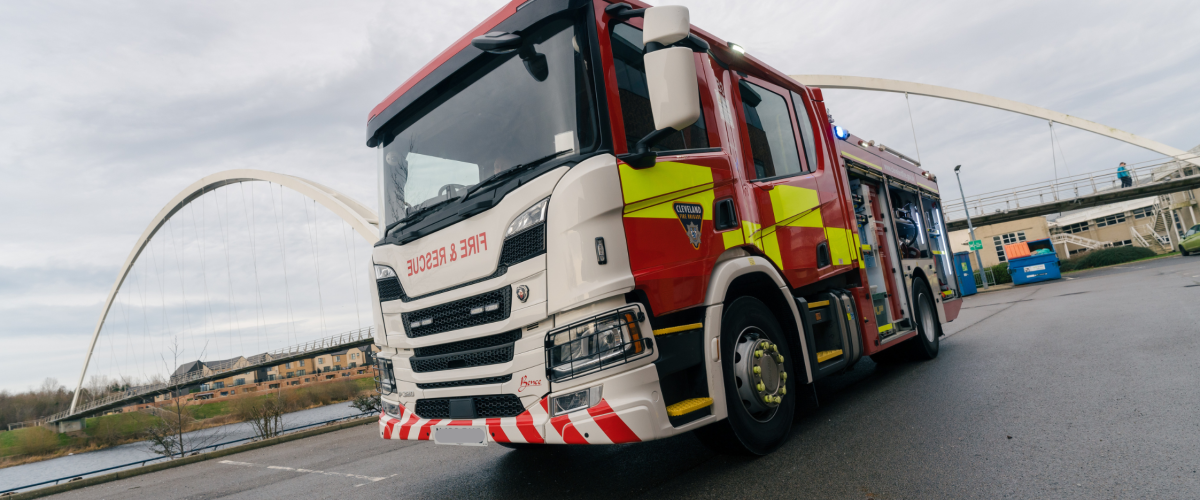
We are a 24 hour, 365 days a year service and to keep our residents safe our operational establishment includes 293 wholetime firefighters and 96 On Call firefighters. We have 21 fire engines, alongside specialist resources such as our aerial appliance and rescue boat. We form part of National Resilience using Mass Decontamination resources and Detection, Identification and Monitoring. We always have a minimum of 52 wholetime firefighters on duty 24/7 to response to incidents and our optimum fire engine availability is between 14-18 appliances, however this does increase to 21 fire engines subject to On Call staff availability.
We have employees working in our Corporate Service teams including Training, Human Resources, Finance, Payroll and Procurement, Risk and Performance, Democratic and Administration Services, Digital Technology and Fleet and Equipment maintenance, all of whom fulfil essential roles to support our front-line response.
Our Performance
The majority of people will never have to call on our services, but if you do we know you will want us to respond quickly. Our response standards include:
- Answering 999 calls within an average of 7 seconds (achieved for 2024/25)
- Attending building fires in an average of 7 minutes for the first appliance and an average of 10 minutes for the second appliance (both standards achieved for 2024/25)
- Attending High Hazard sites within an average of 7 minutes for the first fire engine and for our worst-case scenario, the full resource requirement being on scene within an average of 20 minutes (both achieved for 2024/25)
- Attending Road Traffic Collisions in an average of 8 minutes (achieved for 2024/25)
We anticipate we will continue to achieve these response standards in 2025/26.
Changes in Funding 2026/27 to 2028/29
Like all Fire and Rescue Services our funding comes from three key sources, Government grants, Council Tax and a share of Business Rates.
Major national reforms to the funding system for all local authorities, which includes Fire and Rescue Services, are being introduced from April 2026. Cleveland Fire Authority does not believe these changes recognise the levels of deprivation facing the Authority and high number of chemical sites in the area. As a result of these changes national figures show we will see an increase in total funding (known as Core Spending Power) below the average increase for 2026/27.
National figures also show this position will continue in the following two years (2027/28 and 2028/29). This will mean that by 2028/29 our total resources are forecast to increase by only 7.9% – this is 38% lower than the average for Fire and Rescue Services of 12.8% and 65% lower than the highest Fire and Rescue Service increase of 22.6%
These forecasts assume that all Fire Service will increase their Band D Council Tax by £5. If they do not use this flexibility the increase in resources will be lower.
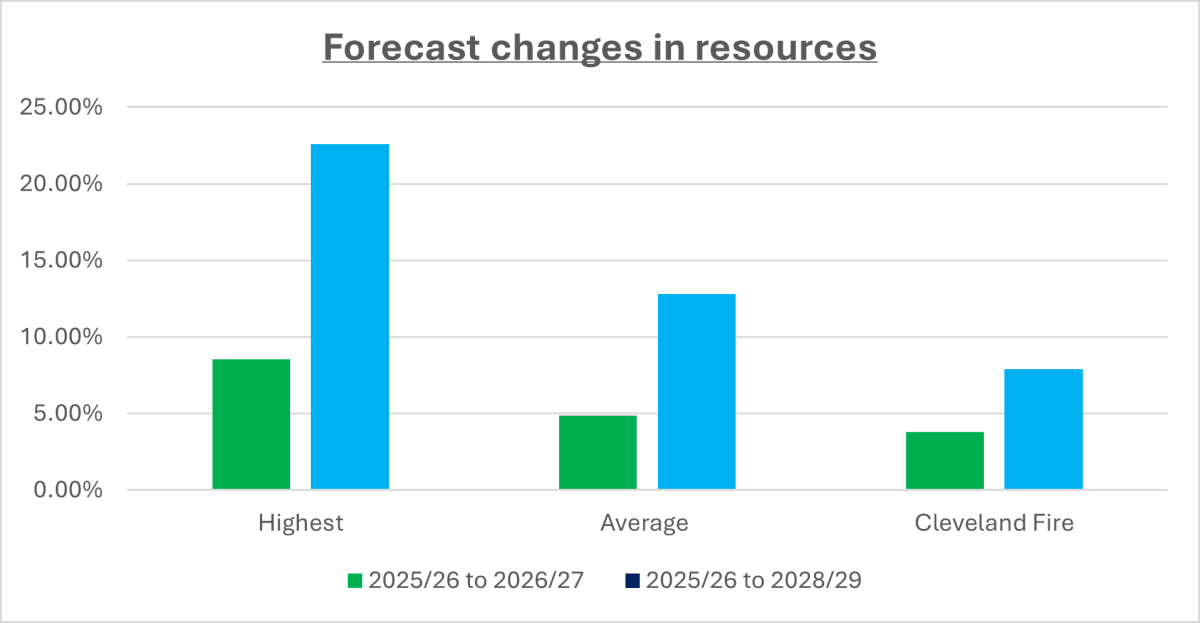
The significant differences in forecast resources highlighted in the above table reflects two key issues:
- The new funding system for allocating grants to Fire and Rescue Services is mainly based on population. We do not believe this adequately reflects the additional demands on our services arising from higher levels of deprivation in our area and the higher than average concentration of chemical plants.
- Our area has a low Council Tax base as a much higher than average proportional of our homes are in the lowest two Council Tax bands – i.e. bands A and B. This means when the Government set a Band D Council Tax limit of £5, we raise less additional income than most other Fire Services. This issue also affects County Durham and Darlington Fire and Rescue Service, and Tyne and Wear Fire and Rescue Service.
Budget and Council Tax 2026/27
Our budget will need to increase to manage the continuing impact of inflation and national pay awards. As a result, our costs are forecast to increase by £1.405m.
As we cannot cover this amount by increasing Council Tax, we began planning how we would manage the budget, in summer 2025.
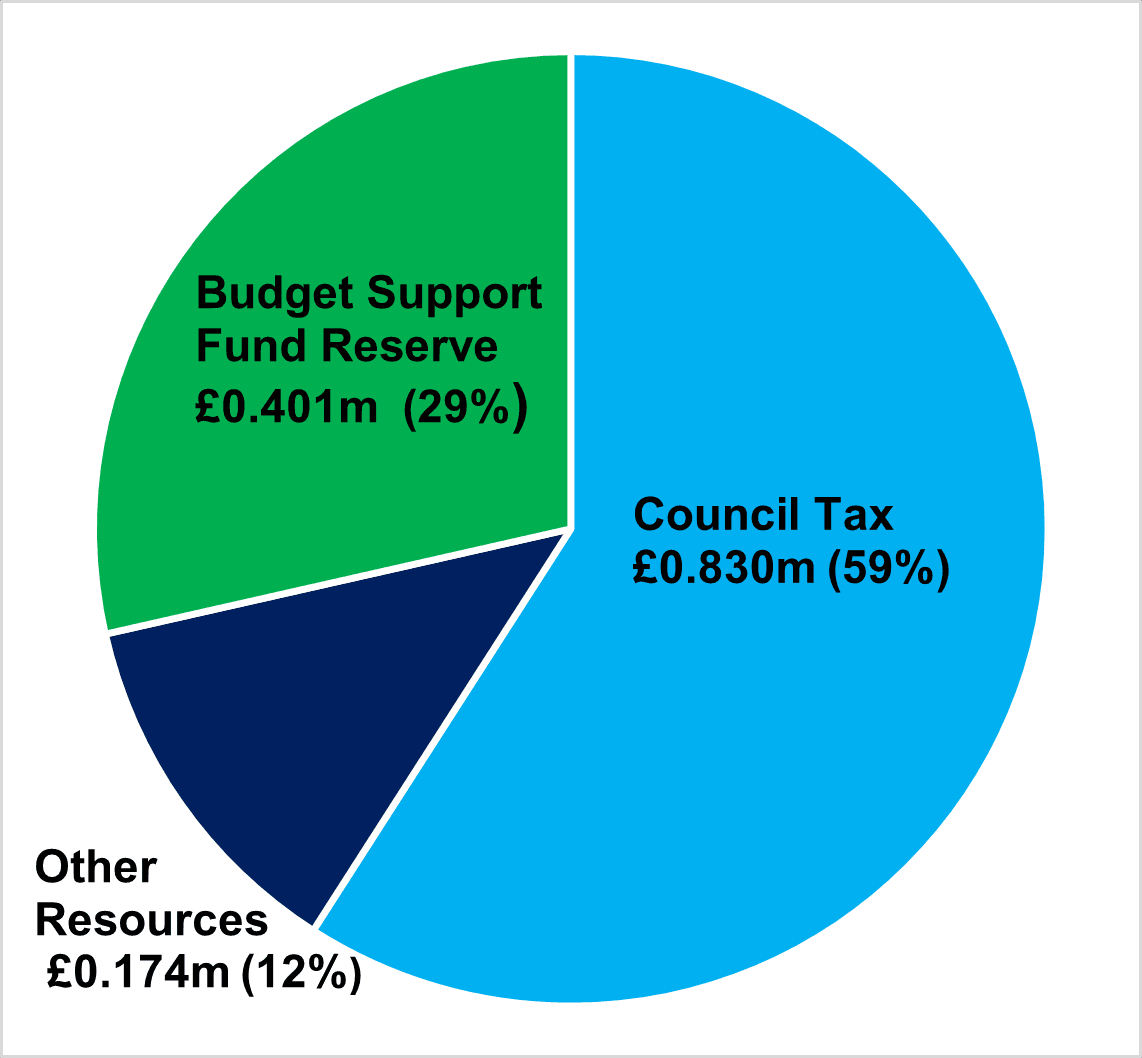
As part of our plan we determined we would use our Budget Support Fund Reserve in 2026/27 to help phase the impact of these changes. As these are one-off resources this strategy is not sustainable, although it provides a slightly longer time by delaying budget cuts from 2026/27 to 2027/28.
The following tables show how we balanced the 2026/27 budget and details Council Tax amounts for each property band.
Summary of measure to address 2026/27 budget deficit of £1.405m
Your Council Tax 2026/27
This table shows the amount of Council Tax based on the banding of properties – 63.8% of households live in a Band A or B property.
| Property Band | 2026/27 Council Tax | Increase from 2025/26 | Percentage of households |
| A | £66.31 | £3.33 | 45.1% |
| B | £77.36 | £3.89 | 18.7% |
| C | £88.41 | £4.44 | 18.3% |
| D | £99.46 | £5.00 | 9.3% |
| E | £121.56 | £6.11 | 5.3% |
| F | £143.66 | £7.22 | 2.1% |
| G | £165.77 | £8.33 | 1.1% |
| H | £198.92 | £10.00 | 0.1% |
This above table shows the amount of Council Tax based on the banding of properties – 63.8% of households live in a Band A or B property
Financial Outlook 2027/28 and 2028/29
After reflecting the £0.401m budget deficit deferred from 2026/27 (i.e. the temporary support from our Budget Support Fund Reserve) we face a 2027/28 deficit of £0.707m, with a further deficit in 2028/29 of £0.490m – which is a total deficit of £1.197m. These forecast are based on inflation and national pay awards being 2% for 2027/28 and 2028/29. We are developing a plan to identify budget cuts to address the forecast deficit, which will be reported to the Fire Authority in July 2026. Final decisions on the final cuts that will need to be implement in 2027/28 and 2028/29 will be made by the Authority in February 2027. There remains a risk that national pay awards and specific inflation pressures exveed our forecasts, which would increase the forecast deficit.